

Measles Resurgence in the United States Raises Alarm Over Vaccine Misinformation and Public Health Cuts

By Alenteshar Newspaper
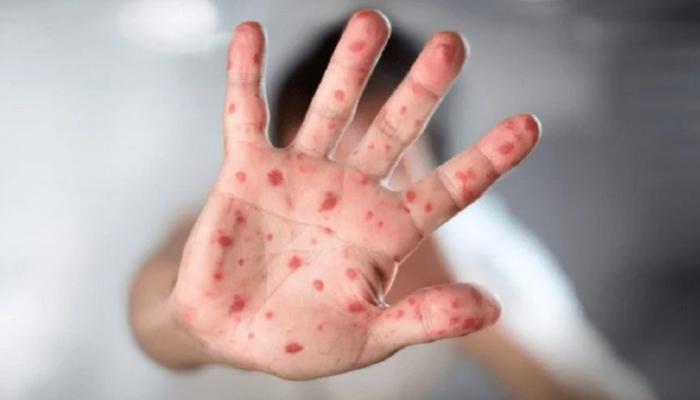
Public health experts are warning that the resurgence of measles across the United States is being fueled by declining vaccination rates, organized misinformation campaigns, distrust of government institutions, limited access to healthcare and cuts to public health resources.
During a recent media briefing, leading specialists in infectious diseases, virology and immunization discussed major outbreaks in Minnesota and Utah, the growing number of adult infections, the risks to pregnant women and infants, and the challenges facing immigrant and underserved communities.
The panel included Patsy Stinchfield, a pediatric nurse practitioner and infectious disease expert; Dr. Andrew Pavia, a specialist in pediatric infectious diseases; Dr. Benjamin Neuman, a virologist; and Dr. José Romero, former chair of the Centers for Disease Control and Prevention’s Advisory Committee on Immunization Practices, known as ACIP.
The discussion was moderated by journalist Sunita Sohrabji.
Minnesota’s Somali Community Was Directly Targeted
Stinchfield recalled Minnesota’s major measles outbreak in 2017, when the state recorded 75 cases, most of them among Somali toddlers and preschool-age children.
Before anti-vaccine misinformation spread through the community, Somali two-year-olds in Minneapolis had an MMR vaccination rate of approximately 92 percent, one of the highest rates in the area.
That rate gradually declined after prominent anti-vaccine activists directly targeted Somali families and promoted the false claim that the measles, mumps and rubella vaccine causes autism.
Parents became frightened and some decided to postpone vaccination until their children reached the age of five, leaving them unprotected during the first and most vulnerable years of life.
Stinchfield recalled one mother who said she did not understand that the first “M” in MMR stood for measles.
The woman explained that her sister had died of measles in Somalia and said that, had she understood the vaccine protected against the disease, she would never have refused it.
Other parents said they had been told that the “triple shot” caused autism or that measles had disappeared from the United States and vaccination was therefore no longer necessary.
“These families were receiving misunderstanding, misinformation and deliberate disinformation,” Stinchfield said.
Public health officials responded by working with Somali doctors, nurses, community outreach workers, imams and trusted local leaders.
They held meetings in mosques, community centers and public housing developments, including neighborhoods where anti-vaccine groups had distributed flyers telling residents not to trust public health authorities.
Stinchfield said officials first listened to parents’ concerns, answered questions and explained both the dangers of measles and the safety of vaccination.
She emphasized that the medical solution is straightforward: two doses of the MMR vaccine. However, the social reasons behind low vaccination rates are complex and require sustained community engagement.
Utah Outbreak May Be Severely Undercounted
Dr. Andrew Pavia discussed a year-long measles outbreak in Utah that resulted in more than 700 officially reported cases.
Although Utah’s overall vaccination rate had previously been relatively high, Pavia said several communities experienced sharp declines, especially in the southwestern part of the state near the Utah-Arizona border.
In some schools, vaccination rates fell to between 30 and 40 percent.
He said several factors contributed to the decline. Some residents belonged to a breakaway religious sect whose leader strongly opposed vaccination. Other people had moved to remote desert communities because they wanted to distance themselves from government institutions and what they viewed as outside interference.
The result was a population with low vaccination rates and deep mistrust of public health authorities.
When measles was introduced into Utah, officials initially controlled several cases. The virus later began spreading rapidly through the under-vaccinated community and eventually reached every county in the state.
Pavia said public health budget cuts made the outbreak more difficult to control.
Stopping measles requires trained personnel to identify cases, trace contacts, vaccinate exposed individuals and isolate infected people so they do not spread the virus to others.
“These efforts require significant resources and personnel,” he said.
Actual Case Count Could Be Two to Four Times Higher
Pavia said Utah’s official case count is likely a serious underestimation.
Measles cases are generally counted only when they are confirmed through laboratory testing. However, many infected people never seek testing.
A family may know that one child has measles and then recognize the disease when it spreads to other family members. Some people live far from medical centers and cannot afford the cost of travel. Others may distrust government authorities and fear that their children’s names will be placed on an official list.
Doctors repeatedly heard from hospitalized children that several other family members had also been sick.
Researchers therefore used two methods to estimate the true number of infections.
The first was a mathematical model based on local vaccination rates, the contagiousness of measles and the effectiveness of outbreak-control measures.
The second involved sequencing hundreds of virus samples and analyzing missing branches in the virus’s evolutionary tree.
Both methods produced similar estimates: the true number of infections could be between two and four times higher than the reported total.
That means 700 confirmed cases could represent between 1,400 and 2,800 actual infections.
Pavia said similar undercounting may be occurring in rural areas of Texas, South Carolina and other places with limited healthcare access.
Adults and Pregnant Women Also Face Serious Risks
Experts stressed that measles is not only a childhood illness.
Approximately one-quarter of U.S. cases have occurred among adults. In Utah, about one-third of patients were over the age of 18.
Adults over 20 and children under five are more likely to suffer severe illness, complications or hospitalization.
Utah recorded more than 50 hospitalizations, primarily among young children and adults.
Pavia also warned about measles during pregnancy.
Pregnant women can become severely ill, and infection during the final 10 to 14 days of pregnancy can expose the infant before or immediately after birth.
Measles can be transmitted in the uterus shortly before delivery. A newborn may also become infected immediately after birth because the virus is highly contagious and can remain suspended in the air.
Pavia said 12 pregnant women in Utah developed measles close to delivery. Their babies survived and recovered, but he described that outcome as fortunate rather than guaranteed.
He also noted that three infants in Ontario, Canada, died after their mothers contracted measles shortly before giving birth.
Women who are planning pregnancy should confirm that they are immune to measles beforehand, experts said, because the live MMR vaccine is generally not administered during pregnancy.
Measles Can Damage the Immune System
Dr. Benjamin Neuman explained that measles spreads from person to person through respiratory particles and is one of the most contagious viral diseases known.
The strain circulating widely in the United States has been identified as the D8 strain and is closely related to the virus detected in Texas in early 2025.
Unlike many other viruses, wild measles attacks cells within the immune system.
This can weaken the body’s defenses and cause what scientists describe as “immune amnesia,” in which the immune system loses part of its memory of infections and vaccines encountered earlier in life.
As a result, a person recovering from measles may become more vulnerable to other diseases.
Neuman said the virus may remain in the body for weeks or even months while causing immune suppression and other forms of damage.
The vaccine, by contrast, contains a weakened form of the virus that stimulates immunity without causing the same destructive effects.
“The vaccine allows the body to build a strong immune response in the safest way we know,” Neuman said.
Why a Vaccine Developed Decades Ago Still Works
The panel also addressed concerns about whether a vaccine developed from strains isolated in the 1950s can still protect against modern measles variants.
Neuman said the current MMR vaccine remains highly effective and does not need to be reformulated at this time.
The two major measles lineages currently circulating are known as B3 and D8. However, the parts of the virus recognized by the immune system have changed very little.
Unlike influenza and COVID-19, measles does not frequently mutate in ways that allow it to escape existing immunity.
Pavia added that measles infection generally produces immunity that lasts for life, while two properly timed vaccine doses provide protection to about 97 percent of recipients.
“Measles is very different from influenza and COVID,” he said. “A virus is not simply a virus. Different viruses behave in very different ways.”
Concerns Over Changes to the CDC Vaccine Advisory Committee
Dr. José Romero discussed changes to ACIP, the federal committee responsible for evaluating vaccine safety, effectiveness and national immunization recommendations.
Romero explained that members were traditionally selected through an extensive review process.
Candidates were nominated or applied themselves, submitted professional records and letters of recommendation, and underwent careful review by CDC officials.
They were also required to disclose financial interests, research funding, consulting relationships and other potential conflicts of interest.
The committee sought members with expertise in epidemiology, clinical trials, vaccine development and public health, while also considering geographic, gender and ethnic diversity.
Romero contrasted that process with the current committee, whose members were directly selected by Health and Human Services Secretary Robert F. Kennedy Jr.
He said the traditional process was designed to ensure continuity, professional expertise, independence and public trust.
Recommendations were normally developed over several months through working groups that included CDC scientists, ACIP voting members and representatives of professional and community organizations.
The groups examined past and current data, evaluated scientific evidence, reviewed vaccine safety and debated possible consequences before holding a public vote.
Romero said the committee’s recent handling of hepatitis B vaccine recommendations did not reflect the same level of scientific rigor.
A thorough review, he argued, should have considered how many children could develop chronic hepatitis B if vaccination declined and what the long-term financial and health consequences would be.
Immigrant Families May Avoid Medical Care
The experts expressed particular concern about immigrant and underserved communities.
Romero warned that declining confidence in vaccination could lead to the return of diseases that have not been widely seen in the United States for decades.
Misinformation is also spreading internationally, including in Latin American countries that historically maintained strong childhood immunization programs.
Pavia said immigration enforcement policies and fear of government institutions are causing some families to delay or avoid medical care.
When families fear visiting clinics or hospitals, children fall behind on routine vaccinations. Sick patients may also arrive for treatment only after their condition has become severe.
“Any barrier to medical care means children will miss vaccinations and receive treatment too late,” Pavia said.
Public health agencies need long-term relationships with immigrant, Hispanic, Native American and other underserved communities, the speakers said.
Those relationships require multilingual outreach workers, trusted community leaders and sustained funding.
Vaccines Received Outside the United States Are Effective
The panel emphasized that measles vaccines administered in other countries are effective.
An adult who received two properly timed doses, with the first dose given after 12 months of age, has a very high likelihood of lifelong protection.
The main challenge for many immigrants is the absence of medical records.
Documents may have been lost during migration, or the first vaccine may have been administered at six or nine months of age because measles was widespread in the person’s country of origin.
Early doses can protect infants during outbreaks, but their long-term protection may not be as strong as doses given after the first birthday.
For people without reliable records, Pavia recommended receiving another MMR dose rather than depending only on an antibody test.
The blood test may cost more than the vaccine and does not measure every part of the immune response.
Travelers should review the vaccination records of every family member before traveling internationally or within the United States.
Domestic airports also serve international travelers, meaning exposure can occur even without leaving the country.
“Pack your clothes, and pack your antibodies,” one panelist advised.
Do Older Adults Need Another MMR Dose?
For a healthy senior who received two confirmed doses of the MMR vaccine, an additional dose is not routinely recommended.
However, people who are unsure of their vaccination history, take medications that suppress the immune system or expect to be in an area with active measles transmission should consult a physician.
An additional dose may be appropriate in some circumstances and is generally safe for people who do not have a medical reason to avoid a live vaccine.
Some healthcare workers have chosen to receive a third dose as an added precaution when working around measles patients or traveling to areas experiencing outbreaks.
Rare Neurological Disease Can Appear Years Later
In response to a question about whether measles can remain dormant in the body like the chickenpox virus, Stinchfield discussed a rare but fatal condition called subacute sclerosing panencephalitis, or SSPE.
SSPE occurs when the measles virus remains in the nervous system after the initial infection.
Seven to 10 years later, it can cause progressive neurological deterioration, loss of physical and mental abilities and eventually death.
The risk is especially high among children who contract measles before the age of two, particularly during infancy.
Some estimates suggest that the risk could be as high as one case for every 600 unvaccinated young children infected with measles.
The condition is rare, but experts described it as one of the most devastating long-term consequences of the disease and one that can be prevented through vaccination.
Experts Reject Link Between MMR Vaccine and Autism
The speakers firmly rejected claims that the MMR vaccine causes autism.
Stinchfield said signs of autism often begin before a child receives the vaccine, and research has found no evidence that Somali children have higher autism rates because of vaccination.
She explained that discussions about autism can be especially complicated in some immigrant communities where there may be no direct translation for the condition and limited access to developmental screening.
Anti-vaccine activists used those communication gaps to create a false cause-and-effect relationship between vaccination and autism.
Pavia said the controversy has also harmed people with autism by taking attention and funding away from research, treatment and services.
“We have diverted resources away from understanding genetic causes and helping children with autism develop successfully,” he said. “The condition has nothing to do with vaccines.”
Two Doses Remain the Best Protection
The panel concluded with a clear message: vaccines remain one of the safest and most effective ways to prevent measles and protect vulnerable members of society.
Neuman said vaccines work today just as they did when previous generations were children.
Romero emphasized that vaccines save lives and allow people to live longer, healthier lives.
Pavia said vaccine safety has never been ignored. Public health officials maintain extensive systems for tracking rare side effects and incorporating that information into national recommendations.
The risks from measles, he said, are far greater than the risks associated with the vaccine.
Stinchfield urged families to remember those who cannot be vaccinated, including infants who are too young, pregnant women and people undergoing cancer treatment or living with immune deficiencies.
“When I vaccinate myself and my family, I protect them, but I also protect you,” she said. “When you vaccinate your family, we are all protected.”

