

Antony Blinken’s Gaza Defense: Whitewashing Israel’s Genocidal War and His Own Complicity

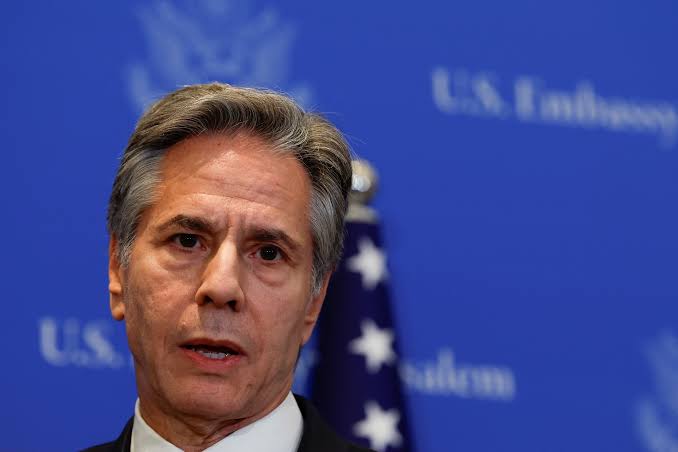
By Said Arikat
November 11, 2026
Washington – Speaking at the Jewish Federations of North America on November 8, former Secretary of State Antony Blinken argued that Israel did not intend to harm Palestinians in Gaza because “the target was Hamas.” He acknowledged that Israel did little to protect civilians, but distinguished that failure from an intention to harm them. The distinction accepts Israel’s declared objective while discounting the words of officials who directed and defended the campaign.
Blinken’s argument raises a question he cannot evade: What responsibility does he bear, alongside Biden, for sustaining the support that enabled Gaza’s devastation? He was not an outside observer, but the administration’s diplomatic defender of Israel.
Israeli intentions: What the leaders said
Blinken’s defense omits statements by Israel’s highest-ranking political and military officials. They came not merely from fringe figures, but from President Isaac Herzog, Prime Minister Netanyahu, Defense Minister Yoav Gallant, senior military officers, cabinet ministers and Knesset members.
On October 9, 2023, Gallant announced a “complete siege” of Gaza: “There will be no electricity, no food, no fuel, everything is closed. We are fighting human animals and we are acting accordingly.” The statement accompanied a policy depriving an entire population of necessities essential to survival. On October 13, Herzog said that an entire nation in Gaza was responsible for the October 7 attacks, challenging the distinction between civilians and combatants.
Netanyahu threatened to turn places where Hamas operated into “cities of ruins” and invoked the biblical Amalek reference in addressing Israelis and soldiers. Gallant declared that Gaza would never return to what it was before. Military spokesperson Daniel Hagari discussed the scale of destruction, while ministers and legislators advocated flattening Gaza or transferring its population.
These statements were not identical, and each must be assessed in context. Together, they cannot be erased by repeating that Hamas was the target. Amnesty International examined 102 statements by Israeli officials, military officers and Knesset members between October 2023 and June 2024, identifying 22 statements by senior officials that appeared to call for or justify genocidal acts. Human Rights Watch documented official statements concerning forced displacement and denial of essential services.
Eleven trips, and diplomacy without consequences
Blinken’s repeated visits make his present defense difficult to separate from his record. By June 2024, he was preparing for his eighth trip to Israel since October 7during which he would backtrack on the Rafah redline . Gaza endured bombardment, mass displacement and destruction of homes, hospitals, schools and essential infrastructure.
The administration had leverage through weapons deliveries, intelligence cooperation and diplomatic protection. Yet Blinken’s diplomacy rarely produced consequences capable of changing Israeli policy. It increasingly managed the fallout rather than stopping the conduct producing it. Eight visits were eight opportunities to make clear that American support was not unconditional. The administration largely declined.
Biden’s responsibility
Blinken did not make American policy alone. Biden set its direction and possessed the authority to change it. His October 2023 visit to Israel demonstrated solidarity, while his administration organized weapons deliveries and mobilized diplomatic resources to protect Israel.
Israel had a right to defend its population after October 7. That right did not exempt it from international humanitarian law or authorize unlimited force. Biden spoke about protecting civilians and expressed frustration with Netanyahu, yet continued supplying weapons as destruction mounted.
Washington could have conditioned arms transfers on compliance with humanitarian law or demanded verifiable changes in Israeli conduct. Instead, it preserved the essential military relationship. This was not simply a failure to persuade Netanyahu. It was a decision not to use American leverage decisively. Biden bears responsibility for that choice; Blinken for helping formulate, defend and implement it.
Warnings without consequences
The administration’s own assessments exposed the gap between warnings and actions. In May 2024, its report to Congress under National Security Memorandum 20 said it was reasonable to assess that American-supplied weapons had been used by Israeli forces in instances inconsistent with international humanitarian law or established civilian-protection practices. It also raised serious concerns about humanitarian assistance.
Nevertheless, the administration did not broadly suspend military assistance. In November 2024, after giving Israel 30 days to improve humanitarian access or risk consequences, Washington declined to suspend arms transfers despite continuing warnings about catastrophic conditions.
The message was unmistakable: American criticism did not necessarily carry a cost. Israel depended heavily on American weapons, financing and diplomatic backing. Biden and Blinken were not powerless spectators. Preserving support despite mounting evidence and repeated warnings helped maintain the conditions in which the offensive continued.
The genocide question
Blinken’s distinction between targeting Hamas and intending harm to Palestinians does not resolve the allegations of genocide. The Genocide Convention requires proof of specific intent to destroy, in whole or in part, a protected national, ethnic, racial or religious group. That is a demanding legal standard, and a final determination belongs to the courts.
The International Court of Justice, in South Africa’s case against Israel, issued provisional measures after finding that rights claimed under the Genocide Convention were plausible and that there was a real and imminent risk of irreparable prejudice to them. The Court did not issue a final ruling that genocide had occurred. Its orders nevertheless underscored the gravity of the allegations and Israel’s obligations under the Convention.
Amnesty International later concluded that Israel was committing genocide in Gaza, a finding Israel rejects. Whatever the ultimate judicial determination, Blinken’s assertion about Israel’s stated target does not answer questions raised by official statements, destruction or conditions imposed on Gaza’s population. Nor does it excuse violations of the laws of war or erase the responsibility of states supplying military assistance.
Protecting a political legacy
Blinken’s comments also appear intended to shape the historical judgment of his tenure. He has acknowledged warning Netanyahu that Israel was losing support among Democrats and would eventually alienate younger Republicans and evangelical Christians. The administration recognized the political damage caused by Israel’s conduct, but did not fundamentally change its policy.
Biden cannot distance himself from decisions made in his name. He had final authority over arms policy; Blinken was his secretary of state, not an independent actor. Their private disagreements cannot erase the consequences of continued assistance.
Gaza widened divisions within the Democratic Party, alienated younger voters and made American support for Israel a subject of open political debate. The administration treated declining public trust as a communications problem rather than a reason to change course. That contradiction became central to its legacy.
History will judge more than intentions
The central question is not whether Israeli officials said Hamas was the target. It is whether military operations complied with international law, whether civilian suffering was foreseeable, whether feasible precautions were taken and whether the destruction inflicted on Gaza was lawful. The statements of Israel’s president, prime minister, defense minister, senior military officers and parliamentarians must be considered alongside the conduct of the war, not dismissed as irrelevant.
The tragedy of Gaza is not only the devastation inflicted by Israel. It is also the role of a United States administration that invoked human rights and international law while sustaining the military and diplomatic support that helped Israel continue its campaign. Blinken was one of its most consequential diplomatic defenders. Biden was the president with the power to change course.
History will judge them not simply by what they now say Israel intended, but by the evidence available at the time, the warnings they received, the power they possessed to intervene and the decisions they made despite knowing the consequences.

