

When Young American Jews Embrace a Binational State, Washington Should Pay Attention

By: Said Arikat
August 4, 2026
News analysis
Washington, D.C- For decades, the idea of replacing Israel with a single democratic state shared equally by Jews and Palestinians was considered politically unthinkable within mainstream American Jewish life. It was dismissed as a fringe proposal associated with anti-Zionist activists, rejected by virtually every major Jewish organization, and frequently condemned as incompatible with Israel’s existence as a Jewish state.
That consensus is beginning to collapse.
A new survey conducted by the Jewish Voter Resource Center found that nearly half of American Jews under the age of 35 now support a single democratic state encompassing Israel, the occupied West Bank, and Gaza, with Israelis and Palestinians electing one common government. Among non-Orthodox Jews under 35, support reaches an outright majority—51 percent.
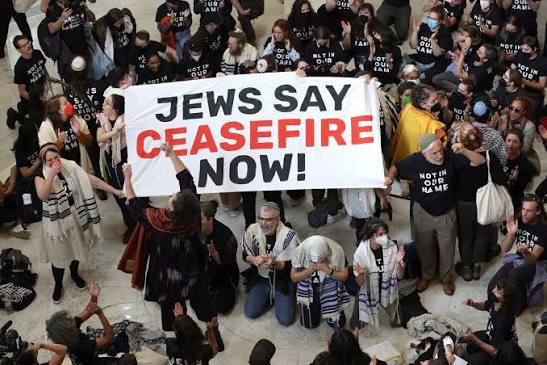
These figures represent far more than another indication of growing frustration with Prime Minister Benjamin Netanyahu or opposition to Israel’s conduct in Gaza. They suggest that a political vision once largely confined to anti-Zionist movements on college campuses is steadily entering the mainstream of young American Jewish opinion. For Washington, that should be the real headline.
Support for a binational state has long occupied the outer margins of American Jewish political discourse. While advocates portrayed it as the only framework capable of guaranteeing equal rights for both peoples, mainstream Jewish organizations generally viewed it as incompatible with Zionism and, in many cases, as denying Israel’s right to exist as a Jewish homeland. Today, however, that once rigid boundary is becoming increasingly blurred.
The survey illustrates how rapidly this transformation is unfolding. Support for a one-state democratic arrangement among American Jewish adults has nearly doubled—from 13 percent two years ago to 24 percent today. Political attitudes rarely evolve this quickly, particularly within communities whose views have historically been among the most stable in American politics.
The significance of this trend lies not simply in the numbers but in who is changing.
American Jews remain one of the Democratic Party’s most loyal constituencies. For decades, they have consistently backed liberal domestic policies while maintaining strong support for Israel and advocating a negotiated two-state solution. Their political influence has extended well beyond their numbers, shaping Democratic foreign policy through Congress, presidential administrations, think tanks, academia, philanthropy, and major advocacy organizations.
It is this generation that is now undergoing a profound political transformation.
Unlike their parents and grandparents, younger American Jews did not come of age during Israel’s so-called “formative wars”, or when the country was widely viewed as a vulnerable state struggling for survival. Instead, their political consciousness has been shaped by movements centered on racial justice, human rights, and democratic equality. Their images of Israel are less likely to be those of 1967 or 1973 than of Gaza under bombardment, expanding settlements in the occupied West Bank, and daily footage of occupation shared across digital media.
Jeremy Ben-Ami, president of the liberal advocacy group J Street, recently argued that this shift should surprise no one. Years of Netanyahu-led governments, continued settlement expansion, and what many younger Jews perceive as demands for unconditional loyalty to Israeli policies have steadily alienated a generation that increasingly judges governments by universal democratic standards rather than ethnic solidarity.
Whether one accepts that explanation or not, the consequences are becoming impossible to ignore.
The survey also reveals a widening distinction between support for Israel’s existence and identification with Zionism itself. Although overwhelming majorities of American Jews continue to support Israel’s existence as both a Jewish and democratic state, only 37 percent now describe themselves as Zionists.
That distinction would have seemed almost inconceivable only a generation ago.
Increasingly, younger American Jews appear comfortable maintaining strong Jewish identities while questioning—or rejecting—the ideological assumptions that have traditionally underpinned organized American support for Israel. In other words, support for Jewish identity no longer automatically translates into support for political Zionism.
The broader American political climate reinforces this evolution. Public opinion surveys have consistently shown declining support for Israeli government policies following the Gaza war, particularly among younger Americans and Democratic voters. Recent polling has also found that substantial numbers of American Jews believe Israel committed war crimes in Gaza, while significant minorities believe Israeli actions amounted to genocide against Palestinians.
Whether those assessments are legally correct is almost beside the point politically. What matters is that such views are increasingly being expressed by American Jews themselves rather than solely by Israel’s traditional critics.
Perhaps the most striking aspect of the survey is that it exposes a growing divergence between American Jews and Israeli Jews.
While younger American Jews are becoming more open to political arrangements grounded in equal citizenship, Israeli public opinion is moving in precisely the opposite direction. Recent Israeli polling suggests support for the two-state solution has fallen to historic lows among Jewish Israelis, while support for annexation without extending full citizenship to Palestinians significantly exceeds support for any genuinely shared democratic state.
The result is an unprecedented ideological divide between two communities that have historically seen themselves as partners in a common national project.
For decades, American Jewish institutions successfully presented support for Israel as an essential component of Jewish communal identity. That consensus is now under sustained pressure from younger generations who receive information through decentralized digital media rather than traditional communal organizations. Universities, social media, independent journalism, and international human rights reporting have transformed how young Jews understand the Israeli-Palestinian conflict.
The long-term implications reach far beyond today’s polling numbers.
Today’s young Jewish Democrats will become tomorrow’s members of Congress, White House advisers, journalists, professors, philanthropists, judges, and foreign policy experts. As they move into positions of influence, they are likely to reshape Democratic thinking on Israel in ways that would have been difficult to imagine only a decade ago.
This does not mean the United States is about to abandon Israel. Strategic cooperation, military partnerships, intelligence sharing, and deep institutional ties will remain pillars of the bilateral relationship. But it does suggest that future American support may become increasingly conditional, measured against questions of democracy, human rights, settlement expansion, and equal citizenship rather than assumed as an article of political faith.
The most important lesson from this survey is therefore not that support for a binational state has grown. It is that the very idea of a binational democratic state is no longer politically unthinkable among a rising generation of American Jews. Once regarded as a fringe aspiration, it is becoming part of the mainstream conversation—especially among Jewish Democrats who will shape the Democratic Party for decades to come.
That may prove to be the survey’s most enduring legacy. Not because it predicts the emergence of a binational state, but because it reveals that the debate over Israel’s future is being fundamentally rewritten from within the American Jewish community itself. When that happens, Washington’s conversation about Israel cannot remain the same.

