

The Manufactured Case for War on Iran

News Analysis
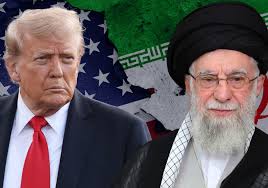
Washington, D.C – The White House is increasingly portraying a U.S. strike on Iran as “necessary,” even as President Donald Trump publicly grants Tehran 15 days to accept his terms. That juxtaposition captures the central weakness of the administration’s posture: urgency without clarity. When Press Secretary Karoline Leavitt claimed there were “many reasons” to attack but declined to specify them, she inadvertently highlighted the problem. A case for war that cannot be articulated plainly is rarely a defensive imperative. More often, it signals political calculation, strategic ambition, or opportunism searching for a persuasive frame.
The most glaring contradiction concerns the nuclear file. Trump has repeatedly asserted that U.S. airstrikes during the June 2025 12-Day War “obliterated” Iran’s nuclear facilities. If accurate, that claim undercuts the need for renewed bombing to prevent an imminent breakout. If inaccurate, it implies the public was misled about the success of a major military operation. The administration cannot coherently argue both that the threat has already been neutralized and that it is urgent enough to justify immediate war. Strategic credibility collapses when mutually exclusive claims are advanced to support the same policy outcome.
Vice President JD Vance has tried to narrow the objective: Iran must not obtain a nuclear weapon. Yet even this formulation appears thin under present conditions. There is no clear public evidence that Iran can rapidly enrich uranium to weapons-grade levels after the reported damage to its facilities. Iranian officials have also signaled willingness to cap enrichment well below the 90 percent threshold associated with weapons capability—levels they have never reached. If the stated goal is nonproliferation, diplomacy remains viable. When a negotiated constraint is plausible, the threshold for preventive war becomes extraordinarily high. Military action is the bluntest, costliest instrument for an objective that may still be achieved through verifiable agreement.
Compounding the weakness of the nuclear rationale is the steady rotation of pretexts. In December, Trump suggested support for an Israeli strike if Iran continued its conventional missile program. In January, he floated military action in response to domestic unrest inside Iran. Now the emphasis has swung back to the nuclear issue. This pattern suggests not that Tehran crossed a single, well-defined red line, but that Washington is searching for a justification with sufficient political traction. States confronting imminent existential threats do not cycle through unrelated arguments. When the rationale shifts, it raises the possibility that the decision to strike precedes the reasoning offered to defend it.
A more coherent explanation lies in external pressure, particularly from Israel. Reporting indicates Israeli officials favor a broad campaign extending beyond discrete nuclear targets, potentially including assets that could destabilize or even topple Iran’s government. Regime change, however, is not a defensive objective; it is an expansive political project with a long record of unintended consequences. From power vacuums to insurgency and regional spillover, such efforts have frequently generated protracted instability rather than durable security. If weakening or transforming Iran’s regime is the underlying aim, the nuclear issue becomes a more palatable public wrapper for a far wider strategic ambition. That would also explain the administration’s reluctance to articulate a single, bounded objective.
The invocation of Iranian “weakness” further underscores the opportunistic tone. The argument appears to be that Tehran is vulnerable after internal protests and recent strikes, making retaliation more containable now than later. But vulnerability is not a legal or moral basis for war; it is a calculation about timing and cost. Striking because the moment seems advantageous is exploitation, not self-defense. Moreover, foreign attacks often consolidate regimes by activating nationalist sentiment, even among citizens critical of their leaders. The expectation that military pressure will catalyze internal collapse is a recurring misjudgment in U.S. strategy, one that has repeatedly produced outcomes opposite to those intended.
Energy markets introduce another revealing dimension. Some analyses frame low oil prices and robust supply as creating a “strategic opportunity,” implying that market disruption from conflict might be manageable. Such reasoning reduces war to a variable in commodity pricing rather than a decision with profound human, legal, and geopolitical consequences. Treating military escalation as tolerable so long as price spikes remain contained reflects a technocratic calculus detached from regional realities. It also assumes that retaliation would be limited and predictable.
That assumption is precarious. Even absent a formal closure of the Strait of Hormuz, Iran possesses asymmetric tools: cyber operations, attacks on U.S. facilities in the region, pressure through allied militias, and calibrated disruption of maritime traffic. Escalation in modern conflict is rarely linear or fully controllable. Wars expand through miscalculation, misperception, and reciprocal signaling, not solely through deliberate design. Confidence that violence can be neatly bounded has often proven illusory.
The broader geopolitical context sharpens the picture. Iran remains one of the few significant regional actors not aligned with U.S. influence. Weakening it would reshape the regional balance of power in ways favorable to both Washington and Israel. Additionally, constraining Iran’s oil exports to China would complicate Beijing’s energy security and reinforce U.S. leverage. These are strategic objectives, not emergency responses to imminent attack. Framed this way, the prospective war appears less a necessity than a convergence of incentives: allied pressure for decisive action, a White House seeking demonstrations of strength, and an opportunity to recalibrate regional dynamics.
Ultimately, the most compelling evidence that an attack is not strictly necessary is the administration’s inability to present a stable, singular rationale. If Iran’s nuclear capacity was truly “obliterated,” if diplomatic constraints remain feasible, and if the supporting arguments revolve around timing, weakness, and oil market calculations, then the logic of necessity gives way to the logic of opportunity. Wars initiated on the basis of opportunity rather than clear defense imperatives tend to drift, expand, and endure. Years later, the original justifications blur, leaving a familiar question in their wake: if the threat was so urgent, why was the reasoning so unstable?

