

Americas Political Earthquake: Trump Repudiated, Democrats Sweep to Power, and Abdul El-Sayed Changes the Debate on Israel

By Said Arikat
November 5, 2026
Washington, D.C- The American people have delivered Donald Trump one of the most devastating political repudiations of a sitting president in modern American history. In a sweeping midterm victory, Democrats have seized control of both chambers of Congress, overturned Republican advantages across the country and exposed the limits of a presidency built on political intimidation, personal loyalty and relentless polarization. This is more than an electoral setback: it is a resounding rejection of Trump’s leadership and a warning that presidential power cannot indefinitely substitute for public confidence.
Beyond the extraordinary Democratic gains, however, one victory carries implications that could reshape a particularly contentious dimension of American politics: the election of Abdul El-Sayed to the United States Senate. His triumph in Michigan is historic, making him the first Muslim American elected to the Senate. But its significance extends considerably further. It challenges the political conventions that have long shielded unconditional American support for Israel from serious electoral scrutiny.
A referendum Trump lost decisively
Trump effectively turned the midterm elections into a referendum on his presidency. He intervened aggressively in congressional contests, demanded political loyalty and made Republican candidates increasingly dependent on his personal endorsement. Voters responded with a verdict that neither his political machinery nor his familiar repertoire of inflammatory rhetoric could overcome.
Democrats’ sweeping gains reflected mounting frustration over economic pressures, the cost of living, presidential overreach, the war with Iran and growing concerns about the direction of American democracy. The reversal of Republican control in both chambers was particularly significant: Republicans entered the election with a congressional majority and a president convinced that his political influence would protect it. Instead, voters delivered a Democratic landslide.
The message was unmistakable: Americans want accountability, institutional checks and a government more responsive to their concerns than to the political ambitions of one president.
For Trump, the consequences are immediate. A Democratic-controlled Congress can investigate his administration, scrutinize executive decisions, challenge appointments and obstruct legislative initiatives. Perhaps more damaging is the political precedent: his endorsement is no longer an unquestionable electoral asset, and Republican lawmakers must now consider whether their continued identification with him is protection or an increasingly serious liability.
Democrats, meanwhile, have won an opportunity, not a blank check. Their coalition includes progressives, independents, younger voters and disaffected Republicans united by dissatisfaction with Trump. They must now translate that mandate into meaningful improvements in economic security, healthcare, democratic accountability and foreign policy. Simply opposing Trump will not be enough.
Abdul El-Sayed: A historic victory against prejudice
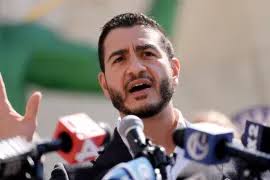
Among the election’s most consequential outcomes was Abdul El-Sayed’s victory over Republican Mike Rogers in Michigan.
A physician and former public health official, El-Sayed made history by becoming the first Muslim American elected to the United States Senate. His achievement is particularly remarkable given the campaign of religious prejudice, personal attacks and attempts to question his American identity that he endured.
Trump repeatedly sought to portray him as a jihadist and associate him with the Muslim Brotherhood, while Republican attacks attempted to turn his Muslim faith and Arab heritage into political liabilities. The underlying message was that a Muslim American, regardless of his professional record or public service, was somehow less entitled to represent his country.
Michigan voters rejected that proposition.
His victory also exposes divisions within the Democratic establishment. After defeating establishment favorite Haley Stevens in the Democratic primary, despite substantial financial disadvantages, El-Sayed faced the extraordinary spectacle of Stevens endorsing his Republican opponent. Her decision illustrated how traditional party loyalties have collided with the increasingly contentious debate over Israel and the influence of pro-Israel political interests.
Ultimately, neither Republican attacks nor resistance within his own party prevented his election. His victory is more than a milestone for Muslim and Arab Americans; it affirms that American political representation cannot legitimately be restricted by religion, ancestry or identity.
Israel: The debate Washington can no longer contain
Perhaps the most far-reaching implications of El-Sayed’s election concern American policy toward Israel.
For decades, unconditional military assistance and diplomatic protection for successive Israeli governments have remained among Washington’s most deeply entrenched bipartisan commitments. Candidates questioning that relationship have frequently faced well-funded opposition and attempts to portray criticism of Israeli government policies as hostility toward Israel itself.
El-Sayed has challenged those conventions directly.
He has described Israel’s destruction of Gaza as genocide and advocated an end to American military assistance and arms transfers. He has also called for Washington to apply its human rights laws consistently rather than exempting Israel from standards imposed on other recipients of American military assistance.
His election demonstrates that these positions are no longer necessarily electoral liabilities. In a politically competitive state such as Michigan, they can form part of a successful campaign.
Public attitudes toward Israel are changing, particularly among younger Americans and Democratic voters. Gaza’s devastation, civilian casualties, mass displacement, settlement expansion and the continued flow of American weapons have generated questions that the political establishment can no longer comfortably dismiss.
El-Sayed’s presence in the Senate will give those questions a prominent national platform. His election also strengthens a growing movement within the Democratic Party demanding that American assistance to Israel be conditioned on respect for international law and human rights.
A challenge to AIPAC and political money
El-Sayed’s victory also carries implications for the American Israel Public Affairs Committee (AIPAC) and the broader network of pro-Israel political spending.
His primary victory over Stevens demonstrated that substantial financial resources and establishment endorsements do not automatically determine electoral outcomes. Stevens enjoyed considerable financial advantages, including support from outside political groups aligned with pro-Israel interests. Yet El-Sayed prevailed.
His subsequent general-election victory reinforces a broader lesson: candidates advocating a fundamental reassessment of American policy toward Israel can win, even when confronted by powerful financial and political opposition.
This does not mean AIPAC has lost its influence. It does, however, challenge the assumption that spending millions of dollars to marginalize candidates critical of Israeli policies will reliably succeed.
Criticism of Israeli government policies is a legitimate exercise of democratic accountability, not an expression of antisemitism. American taxpayers have every right to question how their money is spent and whether military assistance complies with American law and stated values.
A turning point in American politics
The November 3 elections may ultimately be remembered as a turning point on two interconnected fronts.
Domestically, Americans have demonstrated that presidential power has limits and that democratic institutions retain the capacity to impose electoral accountability. Trump entered the midterms believing his political dominance would secure Republican control of Congress. He emerged with a weakened presidency and an opposition empowered to challenge his administration.
Internationally, El-Sayed’s election suggests that the political boundaries surrounding American support for Israel are beginning to shift. The longstanding assumption that unconditional military assistance is beyond serious electoral challenge is becoming increasingly difficult to sustain.
For Trump, this was a humiliating repudiation. For Democrats, it was an extraordinary opportunity to reclaim their role as an effective governing alternative. For El-Sayed, it was a historic mandate to bring questions long marginalized in Washington into the center of national debate.
Perhaps the most consequential message of this election is that American voters are increasingly unwilling to accept that certain issues, particularly the relationship with Israel, must remain immune from democratic scrutiny. The political tsunami that swept Trump and Republicans out of congressional power may therefore prove to be about more than who governs Washington. It may mark the beginning of a fundamental reassessment of what American democracy demands at home and what American foreign policy should stand for abroad.

