

Prop 4 Could Put More Native Candidates on the CA Ballot, Voting Advocates Say

Oct 29, 2026
Cisco Martinez, a member of the Pit River Tribe — whose ancestral lands span parts of northeastern California — grew up believing people like him didn’t hold political office.
“I lived in Sacramento my whole life but never ventured downtown or visited the Capitol until my junior year of high school,” Martinez said.
That changed in 2018, when voters in California’s 40th Assembly District elected James Ramos, a member of the Yuhaaviatam of San Manuel Nation in San Bernardino — and the first California Native American to serve in the state Legislature.
“Perhaps I can be in that same level position one day too,” Martinez recalled thinking. “It’s so important to be able to see ourselves in those roles.”
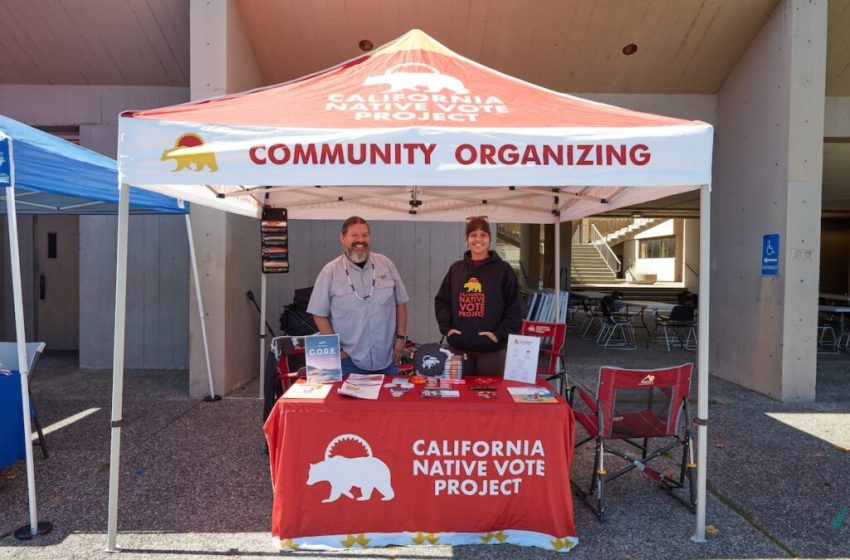
Calvin Hedrick, director of policy, training and tribal relations at the California Native Vote Project, wants the Native community and their allies to undo electoral misconceptions passed down for generations.
“It’s frustrating to hear that voting is not for us,” Hedrick said. “In 1924, we became citizens and should’ve gotten the right to vote then. We know a lot of members of our community still didn’t get the right to vote for a long time after that. Now we need to make sure folks have the understanding that, yes, voting is for us.”

Hedrick sees Proposition 4 as a gamechanger for Native and Indigenous representation in elected office. The measure would lift California’s ban on public financing of political campaigns — not creating a financing program of its own but allowing the state and local governments to create programs that help fund candidates.
“We see qualified candidates running for public office, and we see qualified people who aren’t running [because of financial barriers],” Hedrick said. “A huge chunk of what you’re doing is going out and raising funds, because there’s people ahead of you already raising those funds. So this could give more people a shot.”
Cecelia Carrillo, a member of the Oglala Sioux Tribe, who works in the Santa Clara County clerk’s office, has worked hard to dispel myths about who can and who can’t vote, and to break through the apathy that convinces some people their vote won’t make a difference.
“In my experience, we were referred back to treaties that were broken or things that happened with the government and reasons why we shouldn’t trust the government,” Carrillo said.
One of the groups least aware of their voting rights is the formerly incarcerated, she said.
In 2020, California voters passed Proposition 17, a constitutional amendment restoring the right to vote to people on parole — about 50,000 Californians at the time.
Many of those she meets released from incarceration still don’t know they can vote, or don’t think their vote can make a difference.
“I didn’t get to vote until after I was 40 years old, because the laws were different,” Carrillo said. She tells formerly incarcerated people that “they have the right to vote because it was on the ballot and people voted for it.”
Carrillo reminds them that as working, tax-paying citizens, they have a right to vote, and they should use it.
“It’s a little like the lottery,” she said. “If you don’t play, you definitely can’t win. We can vote to put money into schools and into the community to help our children and grandchildren.”
Hedrick encourages people to pay attention to political matters year-round, not just when it’s time to vote. However, with less than a week until the Nov. 3 general election, he says it’s not too late to get informed on the issues and cast a ballot.
“Don’t rely on commercials or full-page ads that come to your mailbox. Pay attention to who these people are. See who is actually paying for their campaigns and who is endorsing them,” Hedrick said. “Look them up and learn what their platform is and consider whether or not it aligns with your beliefs and the needs of your community.”
In the run-up to the election, Hedrick is canvassing at powwows, tribal gatherings and as many other spaces as he can to spread the word about voting and explain the measures on the ballot. His message to Native and Indigenous Californians: Get informed and vote.
“We have a voice for our water, for our land, for our health, for our education, for our young people,” Hedrick said. “But we’ve got to be able to get out there and vote.”
The California Native Vote Project has general information about the November election on its website.
Find all of ACoM’s 2026 Midterm election coverage here.
Sharon K. Sobotta recently joined American Community Media where she helps manage a new Native/Indigenous Voices initiative. She is as an editing fellow with the UC Berkeley California Local News Fellowship.

