

Seizing Iran’s Enriched Uranium Is A Dangerous Fantasy

By: Said Arikat
March 17, 2026
News Analysis
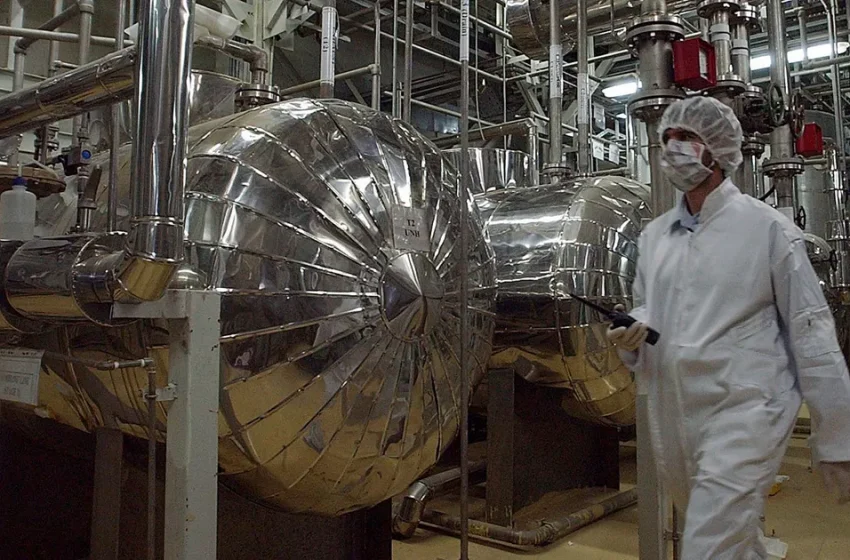
Washington, D.C- On Sunday’s appearance on the CBS program Face the Nation with Margaret Brennan, Iranian Foreign Minister Abbas Araghchi offered a revealing comment about the aftermath of last summer’s strikes on Iran’s nuclear facilities. A significant portion of Iran’s stockpile of uranium enriched to roughly sixty percent purity, he said, was not destroyed. Instead, the material remains buried beneath the wreckage of the bombed sites.
By saying the uranium was “still under the rubble,” Araghchi underscored that the material had neither been removed nor surrendered after the attacks. It is physically trapped beneath collapsed buildings, twisted steel, and shattered concrete. Because Iran has not granted the International Atomic Energy Agency full access to inspect the damaged locations, officials in Tehran say they cannot yet determine how much of the stockpile survived intact.
What Araghchi emphasized, in effect, was uncertainty. The uranium has not been recovered, but neither has it been definitively destroyed. It may be contaminated, damaged, or perfectly usable; no one outside Iran can yet say. For now, the material simply lies somewhere beneath the debris of facilities that once formed the core of the country’s enrichment program.
That ambiguity is not accidental. In nuclear politics, uncertainty can function as a form of leverage. By leaving open the question of how much enriched uranium survived the strikes, Tehran preserves both deterrence and negotiating space. Adversaries must assume that at least some of the material remains recoverable.
Yet Araghchi’s remarks also illuminate a deeper strategic dilemma for policymakers in Washington and elsewhere. Destroying nuclear infrastructure is one challenge; accounting for nuclear material is another entirely. Bombs can demolish centrifuge halls, laboratories, and support buildings, but uranium enriched to sixty percent purity does not simply disappear when structures collapse.
Typically stored in reinforced cylinders, enriched uranium can survive even severe structural damage. If later retrieved, material already enriched to sixty percent can be brought to weapons grade, around ninety percent purity, far faster than uranium starting from its natural state. This technical fact shapes the debate now unfolding among security analysts.
Before the strikes, international inspectors believed Iran possessed hundreds of kilograms of uranium enriched to that level. In theory, such quantities could be further processed to produce material for several nuclear weapons. Even smaller amounts matter: roughly forty two kilograms enriched to sixty percent could ultimately yield enough weapons grade uranium for a single bomb.
The implication is stark. Airstrikes may delay Iran’s nuclear program by damaging equipment and facilities, but they may leave the most critical element untouched. As long as a stockpile of highly enriched uranium exists, the possibility of renewed enrichment and weaponization cannot be entirely dismissed.
This reality has led some commentators to discuss what they call the ultimate endgame: physically seizing Iran’s enriched uranium and removing it from the country. In theory the idea appears simple. If the material itself disappears, the most direct route to a nuclear weapon disappears with it.
In practice, however, such proposals verge on fantasy. Recovering nuclear material inside Iran would demand far more than a limited military strike. It would require forces on the ground, including specialized units capable of locating, securing, packaging, and transporting radioactive material under hostile conditions.
The logistical difficulties alone would be formidable. Nuclear material cannot simply be loaded onto a truck and driven away. It must be handled by trained technicians, sealed in specialized containers, and moved with extraordinary caution to avoid contamination, accidents, or proliferation risks.
More importantly, any such mission would require penetrating one of the most heavily defended states in the Middle East. Iran’s nuclear infrastructure is dispersed across numerous locations, some buried deep underground and protected by hardened bunkers, air defenses, and layers of security.
Attempting to seize uranium from these sites would almost certainly trigger direct military confrontation. At that point the operation would no longer resemble a limited strike; it would begin to look like a full scale invasion.
Even then success would remain uncertain. Intelligence about the precise location of nuclear material is rarely complete. Some stockpiles may have been moved before the strikes occurred, while others could be hidden at undisclosed sites beyond the reach of inspectors or satellites.
A mission intended to eliminate every gram of enriched uranium could therefore fail while simultaneously igniting a wider regional war. The risks would be immense, and the outcome far from assured.
For Tehran, meanwhile, the uncertainty surrounding the buried uranium serves a clear strategic purpose. By neither confirming nor denying how much material survived, Iranian leaders preserve a measure of deterrence. Adversaries must weigh the possibility that usable enriched uranium still lies beneath the ruins.
Araghchi’s statement therefore carries significance beyond a simple description of damaged facilities. It signals resilience, hints at retained capability, and reinforces the ambiguity that has long surrounded Iran’s nuclear posture. In the language of strategy, uncertainty itself becomes leverage.
For policymakers in Washington and other capitals, the lesson is sobering. Military strikes can damage infrastructure and delay progress, but they cannot easily erase nuclear knowledge, industrial capacity, or material already produced. The debate over seizing Iran’s uranium should therefore be approached with extreme caution.
What appears decisive on paper could in reality prove dangerously reckless. Efforts to remove the uranium might transform a contained confrontation into a broader conflict whose consequences would be impossible to control.
Beneath the rubble lies uranium and a still unresolved dilemma.

