

Theology as Policy: Huckabee and the Diplomacy of Dispossession

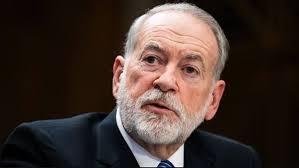
Washington, D.C- When U.S. Ambassador to Israel Mike Huckabee declared that Israel would be “fine” taking territory from the Nile to the Euphrates, he did more than indulge in rhetorical excess. In a televised exchange with Tucker Carlson on The Tucker Carlson Show, Huckabee articulated a worldview in which biblical promise supersedes international law, and theology is permitted to hover over statecraft as a legitimizing force. Even if later softened as “hyperbolic,” the statement was revealing. It exposed a narrative that has long circulated at the ideological margins but now echoes from the mouth of a sitting American envoy.
The provocation centered on Genesis 15 in the Book of Genesis, which speaks of land promised “from the river of Egypt to the great river, the River Euphrates.” Pressed on whether Israel had a right to that territory today—an expanse covering parts of Egypt, Jordan, Syria, Iraq, Lebanon, and Saudi Arabia—Huckabee replied that it would be “fine” if Israel took it all. The ease of that answer is what unsettles. It collapses millennia of theological interpretation, a century of modern conflict, and a dense web of international agreements into a single civilizational claim.
This is not merely a private article of faith. Huckabee has consistently rejected the legal description of the West Bank as occupied territory, preferring the biblical nomenclature “Judea and Samaria” and insisting on an inherent Jewish right to settle it. In doing so, he repudiates not only the prevailing international consensus but also the cautious language that successive U.S. administrations have employed to preserve the possibility—however remote—of negotiated borders. His rhetoric is not an aberration; it is coherent with a Christian Zionist framework that regards territorial compromise as a dilution of divine decree.
What that framework erases are the political and human consequences of permanent occupation. On the ground, the expansion of settlements has been accompanied by a sustained pattern of violence against Palestinians—arson attacks, land seizures, assaults on farmers and shepherds, and, in some cases, killings. Human rights organizations, Israeli and international alike, have documented that much of this violence occurs in the presence of, or under the protection of, the Israeli occupation army. Soldiers frequently stand by as settlers attack Palestinian property or individuals; at times, they intervene not to restrain the aggressors but to disperse or arrest the victims. The structural message is unmistakable: settlement expansion is shielded by state power.
Huckabee’s public posture toward this reality has been, at best, indifferent. He has shown little inclination to condemn settler violence with the clarity he reserves for defending settlement rights. When violence claims the life of a Palestinian— even one who holds U.S. citizenship—the outrage that might be expected from an American ambassador is muted. The killing of 19-year-old Nasrallah Abu Syiam, a U.S.-born Palestinian attacked by settlers, barely penetrated mainstream American coverage. The silence of senior U.S. officials, including the president, compounds the asymmetry. The moral vocabulary deployed to defend territorial maximalism rarely extends to the Palestinians living under its shadow.
Regionally, Huckabee’s comments reverberated with predictable alarm. Egypt, Jordan, Saudi Arabia, Kuwait, Oman, Qatar, the United Arab Emirates, Iraq, and the Arab League condemned the remarks as extremist and destabilizing; Indonesia and Pakistan followed suit. Their reaction was not hysteria but recognition. In a region where borders were drawn through war, treaty, and uneasy compromise, casual endorsement of sweeping annexation reads as a threat to sovereignty itself. Jordan, whose stability is intimately tied to the fate of the West Bank, hears in such statements an existential undertone.
The deeper danger lies in the normalization of a narrative that fuses sacred text with contemporary territorial entitlement. Modern international order rests on the inadmissibility of acquiring land by force and on the principle that sovereignty emerges from mutual recognition, not revelation. To suggest that ancient scripture provides a standing deed to modern territory is to undermine that order. It licenses a politics in which power is sanctified and compromise is recast as heresy.
Diplomacy depends on disciplined ambiguity—on the careful separation between personal conviction and official policy. When an ambassador blurs that line, foreign governments do not parse theological nuance; they assess strategic intent. Even if Washington formally disavows expansionist goals, the spectacle of its envoy entertaining them corrodes credibility. It signals that maximalist visions are not fringe fantasies but tolerated discourse within the orbit of power.
Huckabee’s remarks are thus symptomatic of a broader drift. They reflect a movement in which empathy is selective, legality is negotiable, and the vocabulary of destiny supplants the language of rights. In that narrative, Palestinians appear less as a people with claims than as obstacles to fulfillment of a promise. Settler violence becomes an unfortunate byproduct rather than a structural feature of entrenching control. The occupation army’s role in shielding expansion is obscured beneath invocations of history.
The question is not whether religious belief may inform personal identity; it inevitably does. The question is whether American diplomacy can afford to subordinate international norms to theological conviction. If the United States wishes to remain a credible actor in a conflict defined by land and legitimacy, it cannot allow its representatives to speak as if borders are matters of prophecy rather than negotiation. Words about territory in this region are never abstract. They map themselves onto lives, homes, and graves

